Postpartum Planning
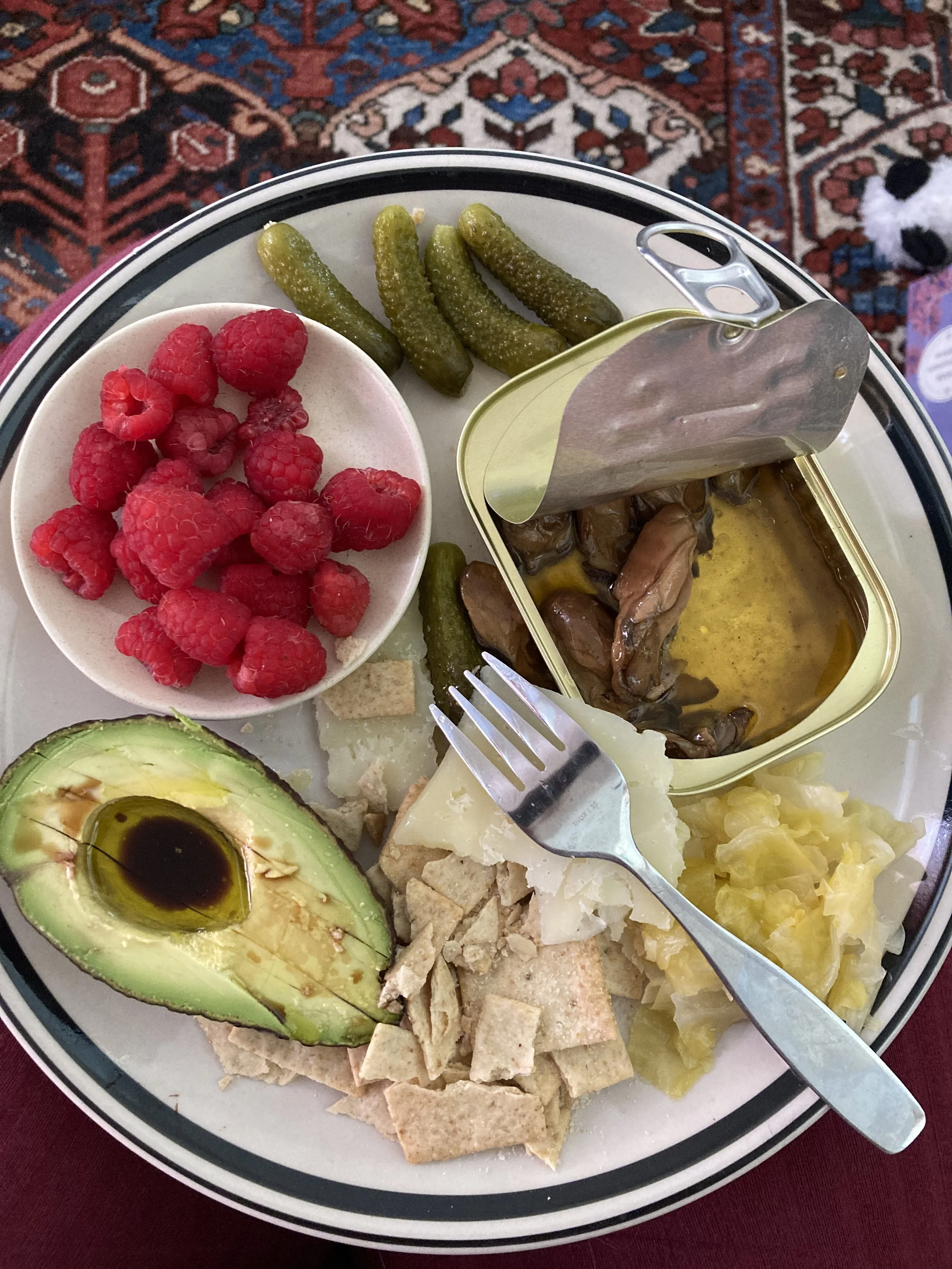
A simple and but favorite nutrient dense postpartum meal.
As a trained postpartum doula I’m biased, but not planning for the early postpartum period is the area I see many people forget or downplay the importance of. Childbirth education is crucial, and yet childbirth still, thankfully, is in most cases hard to plan for. There is tremendous build up to birthing a child, and then there is this brand new tender baby you are now solely responsible for and must care for 24 hours a day seven days a week for years and years to come.
Which is/has been, for many of us, a rude awakening. Many new Moms and parents are surprised by how little they are able to get “done.” Our culture values productivity and our time is often strictly scheduled, but newborn babies don’t operate on schedules and their needs are pressing and round the clock!
Early postpartum is often now called "The Fourth Trimester” and is the first three months following the birth of your baby. This is a time of tremendous change and vulnerability. Your body goes from pregnant state to no longer pregnant flooding you with a rapid change in hormones.
Many people don’t know that past the initial weepy stage as your body integrates this post-birth flood of hormones, often called “the baby blues” you might find yourself faced with even darker or scarier thoughts. In my training a few years ago as a parent volunteer for Perinatal Support Washington I learned that Perinatal Mood and Anxiety Disorders or PMADs as we call them, are the #1 Complication of Pregnancy and Birth. Luckily, PMADs are common and highly treatable.
So then… how do you plan accordingly?
For anyone with a previous history of depression, anxiety and/or other mood disorders, it’s important to disclose this information to your support team sooner rather than later. Mood disorders can also crop up much later in postpartum, around 6 months seems to be common. Here, in Whatcom County, WA, we are lucky to have the amazing local group, Whatcom Perinatal Mental Health Task Forcewho offers a plethora of resources to help new Moms and parents get the mental health support they need.
Some other questions to consider as you think and plan for early postpartum are:
How will sleep be handled?
What is your plan for feeding baby and what support do you need for that?
How will the work of the ongoing mental load of researching ALL THE THINGS for baby be distributed? As a parent you now have to consider things like- what pediatrician will they go to? What kind of diapers will you buy? What sorts of clothes, products, nursery things? Who will set up boundaries with family and friends?
How will domestic chores be handled? The laundry, cooking, cleaning, pet, and home care?
Since the birth of my 2nd child in 2021, I have delved deep into learning about what amounts to a public health crisis- the extreme gendered care gap in the United States, and globally.
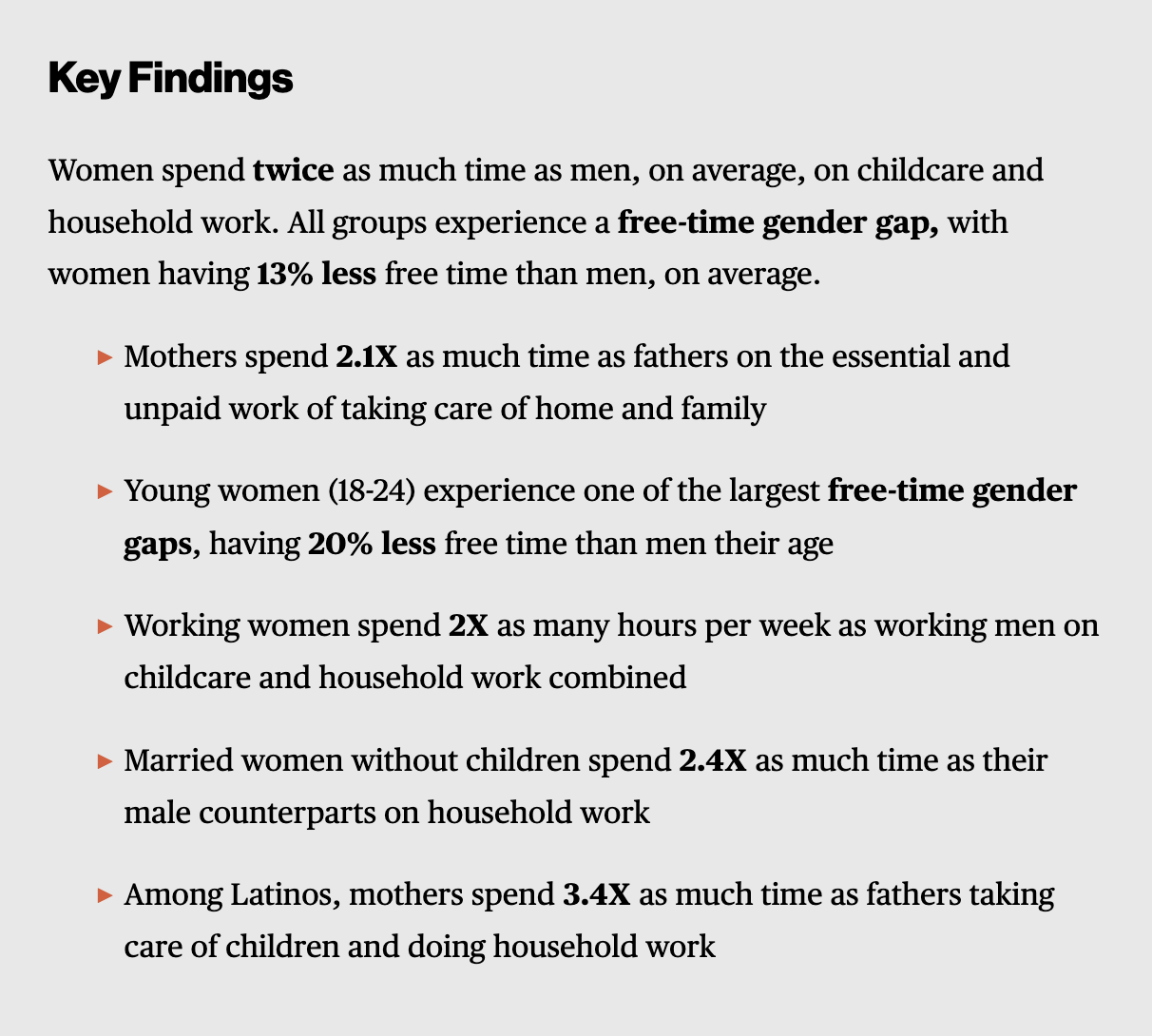
Key Findings from research from
The Gender Equity and Policy Institute. Read the full report here.
Thus, if you are in a cisgendered-heterosexual aka “straight” marriage/partnership this is a conversation I’d suggest having sooner rather than later. For many women, birthing a baby highlights how much care work and emotional labor they have already been doing in the relationship, as the male partner doesn’t show up/make effort to learn how to parent, leaning instead on weaponized incompetence; here’s a great example of what this looks like in the care of a baby from writer/educator Laura Danger. As your doula and advocate I won’t mince words when I say that parenting is a full time job that demands both partners step up and do the work. As bell hooks writes so beautifully in her 1984 essay “Revolutionary Parenting” care work is not gendered.
While my vision of the ideal postpartum for all new mothers/birthing people is not yet standard of care across the United States, I believe it WAS the standard care across most cultures for most of human history. Key aspects of care for the early postpartum time include:
Extended Rest - Paid time off is not the reality for many families in the United States. But it’s essential to newborn care and family integration! If you have it please take it. If you don’t have PTO, are you able to go ahead and set aside some savings to be able to take time off, or put a donation request for cash on a baby registry? Rest is key to healing and simply just soaking up that newborn baby time. I read somewhere one Mama compared early postpartum to a honey moon phase- lounging around all day half naked in a robe with a darling tiny baby cuddled up, eating delicious foods, no clock rushing her to the next thing. While many find early postpartum not quite such a romantic picture- sore body, wailing newborn, changing diapers, and domestic chores thrown to the wayside, being able to rest and delegate home care to your support system, allows you more space to slow down, to be with baby, and to honor this this new version of yourself, your life and your family.
Nourishing Warming Foods - you just grew and birthed an entire human!!!! Now rest and be nourished. I love to ask families what are some favorite comfort foods. Many people stock their freezer prior to giving birth as meal preparation. Eating regular meals can be tricky once the demands of newborn care are upon you. If you plan to breastfeed, eating a nutrient dense whole foods diet and drinking plenty of water is key to making milk. I like to encourage families to have a support person take on the task of setting up a meal train and organizing meals coming at least once a week for the first six weeks. If you don’t have community to offer a meal train, meal planning ahead of time and relying on frozen foods, or pre-made things can be incredibly helpful. A bowl of Top Ramen made with broth and decked out with a soft boiled egg, a big dollop of butter and frozen veggies tossed in at the end to soften up is a quick but nourishing meal and one of my go to quick meals for my family of five.
Loving Touch- Birthing a human is a lot on the body and the demands and changes of early postpartum leave many feeling tender, raw, and sore. Setting aside funds for postpartum massage or asking your spouse, close friend or doula to rub your feat, your neck, or your head will probably feel wonderful. A heating pad is especially nice thing to have for early postpartum.
Time with Nature- connecting to Earth, to your more than human relations allows you to synthesize the birth experience, to have the support of the Earth, and give gratitude for all Earth provides as well as give Earth any hard things that may have arisen or are present. Giving birth can be filled with a complexity of emotions, and can some times feel isolating -connecting to Nature can ground you in the greater web of life we are all bound to.
Time With Wise Ones- before birth work was professionalized, community midwives/granny midwives, Aunties, herbalists, healers, wise women, elders, and doulas supported families, and offered their collective wisdom. These days people are more likely to ask for advice in an online group than have someone to turn to. This is why support from a doula, a non-medical care professional trained in birth and postpartum can be so helpful.
What else would you add to this list if anything?
I want to contextualize these five things and say that many people don’t have time, space, resources or the need to do all of these. These five postpartum guidelines are suggestions and things for you to consider. What your postpartum looks like is yours alone. A first time birth that ended in an emergency cesarean and a newborn needing NICU time will need different support than a seasoned mom birthing her 5th child from a tub on her living room floor with toys littered about. Each birth is unique as is each postpartum.
What postpartum do you vision for yourself? How are you preparing? What conversations do you still need to have?
Reach out if you’d like planning help, further postpartum education or to schedule a meet and greet about postpartum doula services!